Title:
Caste In DNA
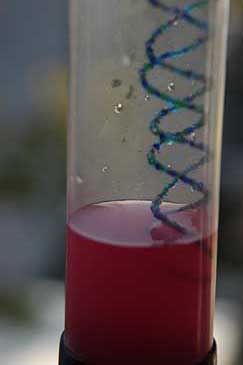
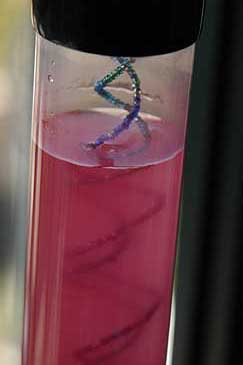
Medium and Dimensions: green, silver, light blue and dark
blue seed beads, gold wire, 5 plastic tubes, needlenose pliers,
water, red water color paint, 36” x 1” piece of wood,
18 KT gold spray, drill, super glue, fake flowers, 36” x
2” x 19”
Legend:
Adenine (A) = green seed beads Thymine
(T) = silver seed beads
Guanine (G) = light blue seed beads Cytosine (C) = dark blue seed
beads
|
| Statement:
My idea incorporates Indian culture and various
aspects of its history to represent current studies in science.
I was intrigued with the prospect of combining history, ancient
culture and DNA with genomic art. I want to represent people’s
DNA as viewed through the confines of a specific culture; as viewed
from within that culture. India is structured with different castes:
Brahmin, Kshatriya, Vaisha, Shudra, and Harijan, in descending order.
One’s position in the caste system determines how well one
is respected and regarded. Stretching this concept to biology and
DNA, it follows that one’s DNA is more “pure”
the higher up one is on the caste ladder. Thus at the bottom of
the hierarchy, the Harijan, also known as the “untouchables”,
would have highly mutated and inferior DNA. I want to represent
each of these DNA structures as people from that culture might view
it from the older culture, when the caste system was more severe.
I hoped to convey that even though their DNA was viewed as inferior,
it is still just as beautiful.
Using green seed beads to represent Adenine,
silver as Thymine, light blue as Guanine, and dark blue as Cytosine,
I strung them accordingly on flexible gold wire. I used 200 bases
from the genomic sequence of Ammonifex degensii for each caste’s
DNA helix. For the Brahmin caste, I left the DNA sequence unmutated,
but for the Kshatriya caste, I mutated about 25% of the sequence.
I increased the number of mutations with each succeeding caste (50%
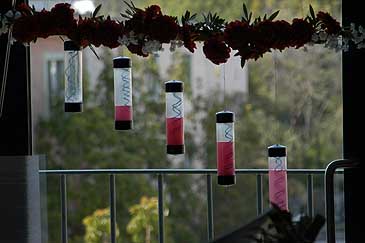
for Vaisha, 75% for Shudra, and nearly 100% for Harijan). The water
and red paint denotes the bloodshed and ostracism that resulted
from these people being deemed as inferior and unclean. The Harijans,
the “untouchables”, are therefore shown as having the
most impure DNA, and having the most “bloodshed” as
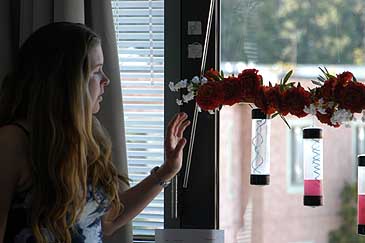
a result of this. The richly colored flowers across the top of the
board symbolize the puja, or worship, performed to the Hindu gods.
All the castes perform puja, and they are all united under their
deities.
Upon casual inspection, the mutated DNA
appear the same as the ‘perfect’ DNA helix. However,
the differing amounts of ‘blood’ in each tube catch
the viewer’s eye. The DNA inside the tubes is similar, as
is the DNA within humans. The noticeable difference is the ‘blood’,
which strives to convey what the mutated DNA alone cannot accomplish.
|
| Mutated
Sequence:
Kshatriya
GATACAGTATACCTTCGGTAGTCTACGGCTACATAGGCTTG
AGTGTGCCCTCGTTCTTCATCCGCAACCACCTGGGGGGGAT
ACACACCGGTGCTGGCCGGCTTTCAGCCGTGCTGGTTCTCTC
AGTAATGATCCTGCCTACCATAGCCAGTGTGGCCACTGACTC
CCTGCGCTCCCTTTCTCACATCCTGCGGGACCGGCAGTACGCCCTA
Vaisha
CATATAGCTTCGGTAGGAGTGTTCTACGGCATCTACATAGGCTT
GCTCGCCTTTTCCATCCGCAAGATACACCACCTGGGGGGCACC
GGTTTAAACAGCCTGCCCCCTGGCCGGCGTGCTTTGGCTCTCAG
TAATGTAATGATCCTGCCTACCATAGCCAGTGTGGCCACCCTCA
GTCTGCGCTTTTCCCCTCACATCCTGCGGGAGACGGCCTAGATAC
ACGCCCTA
Shudra
GTATAGTATCCTTCGGCGGTAGTTAGTCTACATCGGCATCATAGT
GTGAGTTCGGCTCGTTCCCCCCTTCATCCGCAACCACCACCTGGG
GGGGGGGGGCACCGGTTTTTTCAGCCTGCCCCTGGCGCGGCCCGT
GCTGGTTCTCTCAGTAATTAATGATGATGATCCTGCCTACCATAGC
CAGGGCTGTCACCTCAGTCCTGCGCTCCCTTTCTCACGCCCATCC
CCCGTGGGAGACGGCCTACTA
Harijan
TACGCCCTACGGTAGTCTACGGCTCCCACATAGGCTCCCTGAGTG
CCCTGCTCCCCGTTCCCCCCTTCACGCCTAATCCACCTGGGAAAG
GGCACCGGTTTCAGCCTGCTCCCGGCCCGGCGCTGCTCCCGGTTCT
CTCAGTAATTCCTAGGCCTACCATTACCATAGCCAGTGTGGCCACT
GACTACTCCCTGCGCTCCCCCCCTCTTTACATCCTGCGGGAGACCC
GGCCCGTATACCTTTTTTTTTTTTTT
|